
Rolex vs Patek Philippe: A Side-by-Side Comparison of Two Swiss Watch Legends
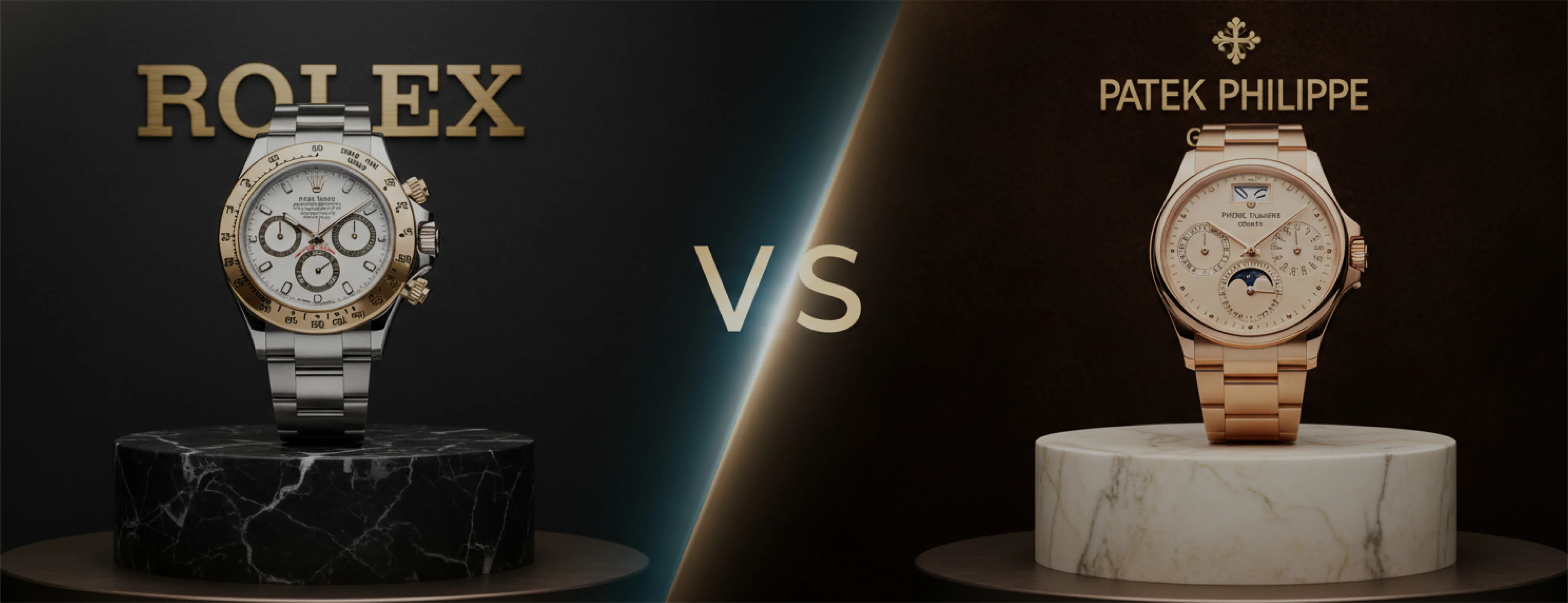
Rolex vs. Patek Philippe is the correlation that characterizes the business at the top of the Swiss watchmaking industry. These two mansions are at the highest rungs of the horological ladder, but they do watchmaking with totally different philosophies.
Engineering perfection, dependability, and worldwide acknowledgment are the things that drive Rolex – where Patek Philippe is the embodiment of conventional haute horlogerie, craftsmanship, and extreme exclusivity. Instead of asking which brand is better or worse – ask: which one suits your lifestyle, collecting goals, and long-term values.
This detailed contrast deconstructs their tradition, design dialect, craftsmanship, market segmentation, Rolex vs Patek collectability, and practical wearability in a systematized, simplified-to-scan format.
Brand Heritage & Philosophy
| Aspect | Rolex | Patek Philippe |
| Founded | 1905 | 1839 |
| Core Philosophy | Accuracy, reliability, creativity. | The culture of tradition, artisanship, and art. |
| Brand Identity | A success, adventure, success. | Traditions, luxury, uniqueness. |
| Ownership Focus | Daily wear & performance | Heirloom & legacy |
Rolex was established with a clear purpose: to produce watches that work perfectly even in harsh conditions. Since its first waterproof case, the Oyster, Rolex has continuously challenged the technical possibilities of making luxury watches an efficient and reliable tool.
Patek Philippe has a completely different foundation. Its ideology is based on the perfection of the work by the artisans and durability. The brand is well known for its saying that you never really own a Patek Philippe, you just take care of it so that the next generation will own it. Each watch is meant to outlive its owner, with attention on the quality of finishing, mechanical elegance, and classic design as opposed to outdoor usefulness.
Rolex Signature Models & Design Language
Rolex collections are functional and immediately identifiable, and the designs are not radical but change gently. This is one of the reasons why Rolex watches are not outdated for decades.
Iconic Rolex Collections:
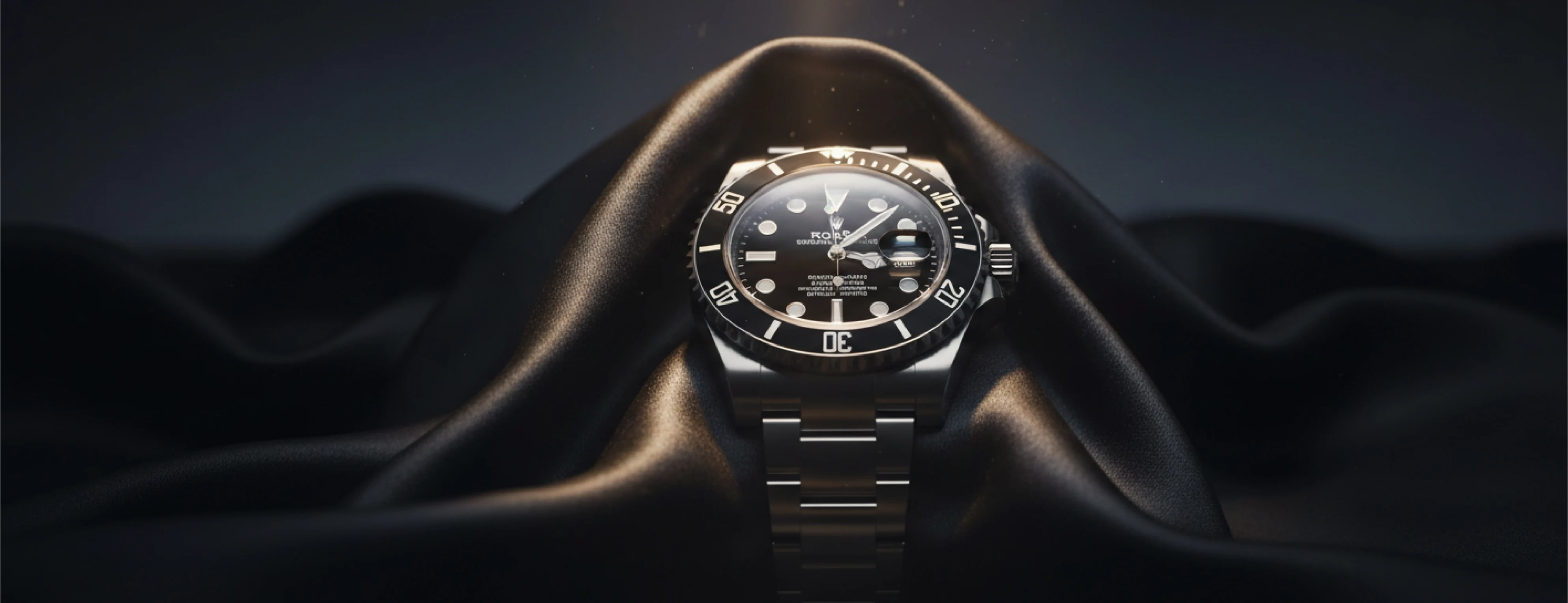
- Submariner: the most powerful dive watch in the world.
- Daytona: a motor sport chronograph that has the legendary collector appeal.
- GMT-Master II: two-time watch, pilot, and world traveler.
- Day-Date: The flagship dress watch sold by Rolex, which is made in precious metals only.
- Sky-Dweller: one of the most technical models of Rolex.
Rolex design is more about legibility, strength, and ergonomic comfort. The presence of big glowing labels, screwed down crowns, and Oyster bracelets repeats the message of the brand being a producer of a luxury watch that is to be worn and not admired in a locker room.
Patek Philippe Signature Models & Aesthetic Identity
Patek Philippe collections are oriented to grace, to complex working with the mechanisms, and to a perfect finish as opposed to the functionality of the tool-watch.
Notable Patek Philippe Watches:
- Calatrava: watch and design benchmark minimum dress.
- Nautilus: luxury sports icon bracelet.
- Aquanaut: sports-luxury today.
- Enhanced features: sophisticated features performed with a fine artistic touch.
Patek Philippe offers much more customisation in the shape of the case, textures on the dial, and the types of complications. You will also discover perpetual calendars, minute repeaters, split-second chronographs, and world timers that have been completed to a world of standards few brands can achieve. This variety confirms the fact that Patek Philippe is a watchmaker.
Market Positioning & Production Scale
| Category | Rolex | Patek Philippe |
| Annual Production | ~1,000,000 watches | ~60,000-70,000 watches |
| Availability | Scarce but widespread | Extremely limited |
| Retail Access | Waiting lists common | Allocation-based |
| Secondary Market | Highly liquid | Premium-driven |
The number of watches Rolex sells is significantly higher than Patek Philippe's, but demand is still higher. This limited availability has transformed most steel Rolexes into instant classics that sell at a high resale value.
The small quantity of production output at Patek Philippe develops exclusive luxury. Several models cannot be readily obtained without a lengthy history of purchase, and even rare sources can sell way above retail on the second-hand market. Patek Philippe's scarcity in this regard is both deliberate and a structured one.
Craftsmanship & Innovation Compared
Rolex: Engineering Excellence
There is no comparison with Rolex when it comes to industrial watch precision and durability.
Key Strengths:
- Oystersteel, Everose gold, and Cerachrom are proprietary materials.
- Patented movement (Parachrom hairspring, Chronergy escapement)
- Full case movement to vertical movement integration.
- High levels of accuracy and reliability.
The Rolex movements are simple to the eye, but they are designed to withstand shocks, resist temperature, and have a long service life, suitable for the actual application.
Patek Philippe: Horological Artistry
Patek Philippe is devoted to the art of best craftsmanship.
Key Strengths:
- Much hand-finishing to movements and components.
- Mechanical complications of a complex nature.
- Uncommon decorations (enamel, guilloche, hand engraving)
- Efficient archival records and prolonged servicing.
Most Patek Philippe watches are part timepiece and part artwork.
Collectability & Investment Perspective
Among luxury watch collectors, the debate of Rolex vs Patek Philippe investment often highlights different strengths in luxury watch investment.
| Investment Factor | Rolex | Patek Philippe |
| Liquidity | Very high | High but niche |
| Entry Price | More accessible | Significantly higher |
| Appreciation Trend | Strong for sports models | Superior to unusual allusions. |
| Collector Base | Global and broad | Elite and specialized |
Rolex sports watches are considered one of the most liquid luxury watches in the world. Because of their international reputation, their rarity, and high demand, they appeal to an investor as well as a collector with strong Rolex watch investment value.
Patek Philippe watch investment takes the lead in the luxury auction industry. There is a premium on rare and discontinued complications, models of historical significance, which can reach record prices, Patek Philippe being a staple of serious horological collecting. Vintage Rolex vs Patek Philippe pieces further emphasize this, with Patek often commanding higher premiums in auctions due to rarity.
Wearability & Lifestyle Suitability
The difference that sets Rolex and Patek Philippe apart and makes them better suited to daily life is one of the most significant.
Rolex excels in:
- Everyday wear
- Travel and sports
- Casual and business flexibility.
- Owners who want a single watch that suits every occasion.
Patek Philippe excels in:
- Formal settings
- Private collections
- Special occasions
- Long-term legacy ownership
This is the main difference in lifestyle, which can be the determining factor for buyers.
Expert Opinions from the Watch Industry
Experts in the industry will always agree that Patek Philippe is the ultimate form of traditional watchmaking, and Rolex has attained such cultural supremacy that it is unsurpassed by any other luxury watch brand.
Patek Philippe is suggested by the auction experts due to its ultra-high-end collection and long-term legacy value. On the other hand, Rolex is commended as providing an unprecedented balance in terms of durability, recognizability, and stability in investment.
According to experts, Rolex sports models offer some of the best long-term value development across the contemporary luxury watch market.
Final Verdict: Rolex or Patek Philippe?
Buy Patek Philippe when you appreciate:
- Fixed Swiss handwork.
- Mechanical complications
- Rarity and exclusivity
- Heirloom-level prestige
Choose Rolex if you value:
- Reliability and wearability.
- Global brand and iconic design.
- Strong resale liquidity
- A tradeoff of luxury and performance.
Finally, Rolex vs Patek Philippe is not a battle of the best but a battle of accordance. Both brands are the highest level of Swiss watchmaking and still remain the indication of luxury, success, and craftsmanship on the border of generations.
Frequently Asked Questions
Is Rolex better than Patek Philippe?
Neither is objectively better; Rolex excels in durability and daily wear, while Patek Philippe focuses on craftsmanship and exclusivity.
Which brand holds value better, Rolex or Patek Philippe?
Both perform strongly, but Rolex offers higher liquidity, while Patek Philippe commands higher premiums for rare references.
Is Patek Philippe more prestigious than Rolex?
In traditional watchmaking circles, Patek Philippe carries greater prestige, though Rolex dominates global recognition.
Are Rolex watches easier to buy than Patek Philippe?
Yes, Rolex models are more widely available, while Patek Philippe purchases are often allocation-based.
Can a Rolex be worn daily compared to a Patek Philippe?
Rolex watches are designed for everyday use, whereas many Patek Philippe models are better suited for careful wear.
Which brand is better for first-time luxury watch buyers?
Rolex is generally more approachable for first-time buyers due to pricing, durability, and resale strength.